What Happened: The October Sabotage Operation
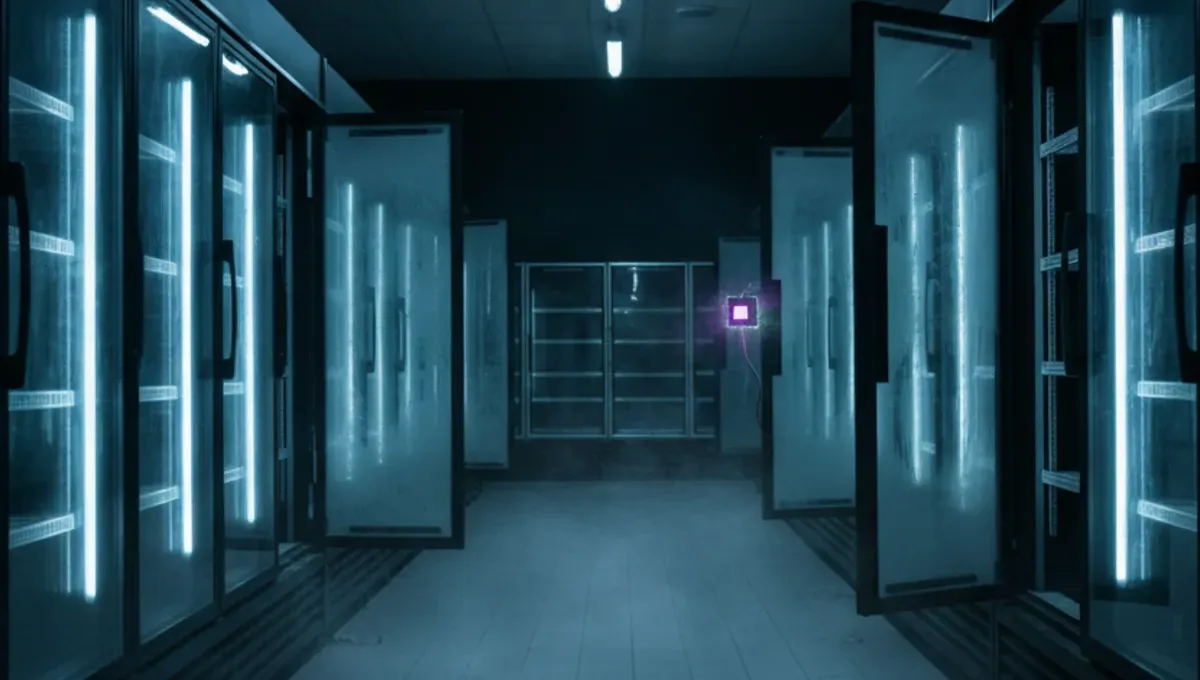
On the night of October 11, attackers from Iran's Islamic Revolutionary Guard Corps (IRGC) accessed refrigeration controllers at approximately 700 retail sites across France. Once inside, they changed defrost settings to high temperatures, causing rapid warming of stored food and equipment damage. At least 15 locations caught fire as a result. French authorities later attributed the attack to the IRGC's cyber operations unit, marking the first publicly confirmed instance of this unit directly sabotaging physical infrastructure in a Western country.
How the Attack Worked: Targeting Weak IoT Security
Refrigeration controllers in retail environments are industrial IoT devices that manage temperature cycles and defrost schedules. Most operate on standard protocols and connect to management networks with minimal segmentation from external internet access. The attackers likely exploited a combination of weak default credentials, unpatched vulnerabilities in the controller software or the networks managing them, and the absence of strong authentication between the device and operator dashboards. The defrost function—which periodically warms the system to melt frost buildup—is normally controlled by automated timers but can be overridden remotely. By forcing defrost into continuous high-temperature mode, the attackers destroyed the thermal chain, spoiling food and stressing the machinery until failure.
Why IoT Retail Systems Are a Vulnerable Target
Retail refrigeration networks are often treated as non-critical and receive little security attention compared to payment systems or corporate data infrastructure. They are managed by facility teams, not security specialists, and equipment updates may be infrequent because downtime costs inventory. Controllers frequently use hardcoded or default passwords, lack encryption on command channels, and sit behind firewalls designed to block inbound threats but not validate outbound commands. A compromised site network, a supply-chain breach affecting the controller manufacturer, or an exposed VPN used by remote technicians can give attackers a foothold. Once inside, changing a setting requires no special exploit—just access to the management interface.
Nation-State Motivation and Attribution
The IRGC's Quds Force and its cyber subunits have carried out operations against Western energy, transportation and military targets for years, typically through espionage or disruption campaigns. Physical sabotage of retail food infrastructure serves multiple purposes: disrupting supply chains, generating public alarm, testing response protocols and signaling capability to state adversaries. The targeting of France specifically aligns with broader geopolitical tensions in the Middle East and Europe. French attribution came from forensic analysis of malware samples, command infrastructure, operational timing and corroboration with signals intelligence from allied agencies. The public naming of the IRGC is unusual and signals French determination to deter future attacks, though no immediate sanctions or military response followed.
Reality Check: Critical Infrastructure Lessons
According to French and European cybersecurity agency reports, the attack exposed how nation-states can bypass air-gapped critical infrastructure by exploiting IoT devices that were never designed with adversaries in mind. Industrial control systems, building management, and retail equipment often run decades-old protocols and operate under the assumption that physical access or network proximity is controlled—an assumption that breaks down in an interconnected, remotely managed world. Retailers and facility managers frequently lack visibility into which IoT devices are connected and what command channels exist. The incident demonstrated that sabotage does not require stealing data or encrypting files; merely changing operational parameters can destroy value and create physical danger.
Practical Implications for Organizations and Users
For IT teams managing retail or facility infrastructure, this attack is a reminder to inventory all connected devices, change default credentials immediately, segment IoT networks from corporate systems, and enforce multi-factor authentication on remote management tools. For ordinary users, it underscores the broader reality that cyberattacks are no longer confined to screens and databases—they affect physical supply chains, food safety and fire risk. Consumer awareness rarely extends to the devices and networks behind the services we use daily, yet those are precisely where governance is weakest. The incident also highlights how IoT vulnerabilities can serve as a vector for espionage and warfare, shifting the threat model from theft to sabotage.
What Changed After the Attack
Following the October incident, the French government convened meetings with retail industry groups and began drafting IoT security standards for critical infrastructure. European Union agencies accelerated discussions on mandatory vulnerability reporting and network segmentation rules for supply-chain-critical systems. However, enforcement remains slow and many retailers operate with minimal security investment because audits are rare and penalties light. The attack did not trigger the kind of security overhaul seen after data breaches; instead, it exposed a blind spot in how nations and companies think about cyber threats beyond data exfiltration.
What You Should Do Now
If you work in retail, facility management or supply-chain operations, audit the IoT and building-management systems you depend on: list all connected devices, verify that default passwords have been changed, and confirm that remote access tools require strong authentication. If you are a consumer, this attack is a reminder that the infrastructure supporting everyday services is fragile and targeted; support retailers and supply chains that invest in security, and report suspicious behavior (unexplained store closures, fire incidents, equipment failures) to managers. For security professionals and policy makers, use this incident as a teaching case when advocating for mandatory IoT security standards and segmentation requirements in regulations affecting retail, energy and transportation sectors.
FAQ
Can my home smart refrigerator be hacked the same way? Home appliances operate on different networks and use consumer-grade encryption, making them unlikely targets for nation-state actors focused on disruption. However, weak security on smart home devices remains a concern for botnets and ransomware, so keeping firmware updated and using strong Wi-Fi passwords is good practice.
How did France know it was Iran and not another group? French and allied intelligence agencies matched malware code, command-and-control server infrastructure, operational timing and targeting patterns to known IRGC cyber units. Attribution is never 100 percent certain but based on forensic and intelligence evidence; public attribution is rare and signals high confidence.
Are retailers now forcing all refrigeration systems to be replaced? No. Most retailers are applying patches, changing passwords and adding network monitoring rather than replacing hardware. Replacement would be prohibitively expensive and unnecessary if security controls are implemented.
What happens if a similar attack targets hospitals or water treatment? The impact would be far more severe because failures in medical or water systems can directly endanger lives. These sectors have stronger regulations and security audits, but gaps remain, particularly in smaller facilities and in developing nations.
Source: The Hacker News