What Are Deep Web Links and Tor Onion Addresses?
Deep web links refer to URLs ending in .onion, which are hosted on the Tor network and not indexed by standard search engines. These addresses are cryptographic hashes derived from the onion service's public key, making them difficult to forge or predict. A v3 onion address, the current standard, consists of 56 characters followed by .onion, replacing the older 16-character v2 format. Tor routing encrypts traffic through multiple relays, obscuring the user's IP address and the service's location. Deep web links 2025 tor and links para deep web tor follow the same technical principles, though specific services and mirrors change over time. Understanding that .onion addresses are not inherently illegal—they simply provide anonymity and encryption—is essential before accessing them.
How Tor Routing and Onion Address Resolution Work
When you access a deep web link via Tor, your connection passes through at least three relays: entry, middle, and exit nodes. Each relay only knows the node before and after it, preventing any single point from mapping your traffic to your identity. Onion addresses resolve within the Tor network itself, not through DNS. The Tor browser uses a distributed hash table to locate onion services, downloading a descriptor that contains the service's introduction points. This process means that links deep web tor remain reachable even if their IP address changes, and the service operator never learns the user's real IP. The encryption is end-to-end: traffic between your Tor browser and the onion service is encrypted, and the exit node cannot decrypt it. This architecture is why Tor links 2026 remain viable for privacy-conscious communication and information access.
Finding and Verifying Legitimate Onion Links
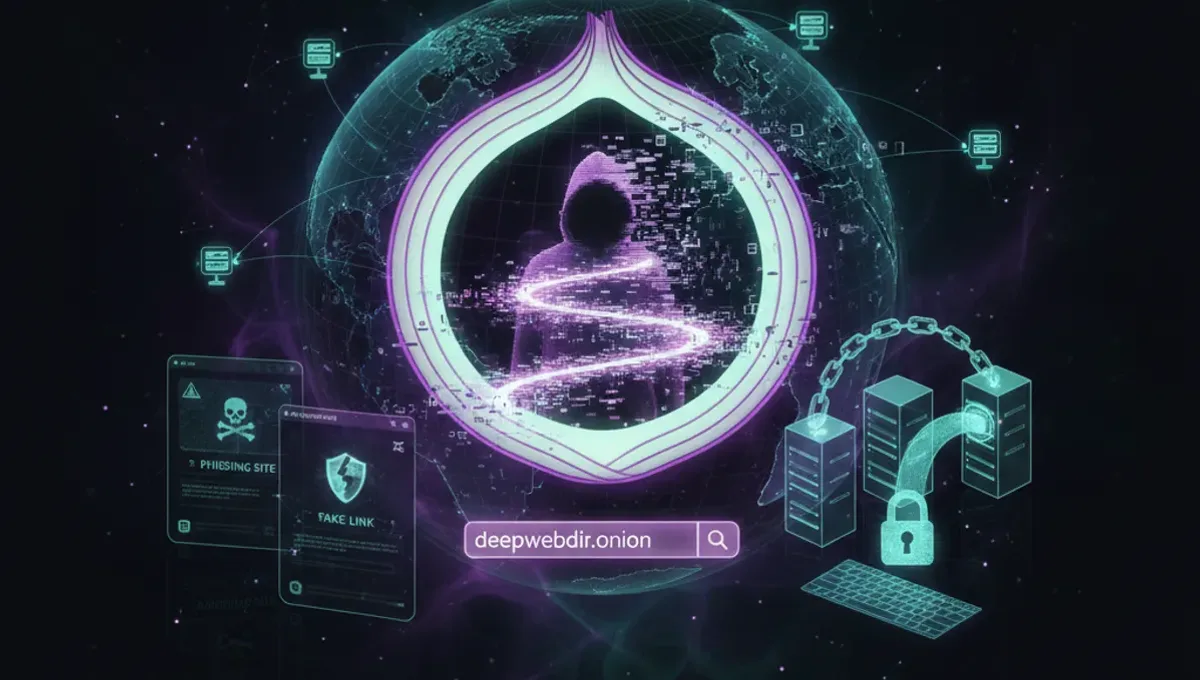
Locating current deep web links requires caution, as phishing clones and fraudulent mirrors proliferate. Legitimate onion links are typically announced through official channels: the project's clearnet website, PGP-signed statements, or established community forums. Verification involves checking PGP signatures against the project's public key, comparing the onion address against multiple independent sources, and examining the site's SSL certificate fingerprint if provided. Many projects publish their v3 onion address on their clearnet homepage; if the address differs from what you found elsewhere, assume the alternate link is a clone. Links da deep web tor that appear in unverified directories or social media should be treated as unconfirmed until cross-referenced. The Tor Project's official documentation lists verified mirrors and services. Always access a link for the first time through a fresh Tor circuit, and monitor for unusual behavior such as unexpected redirects or login prompts that differ from previous visits.
Distinguishing Genuine Onion Mirrors from Phishing Clones
Phishing clones are fraudulent copies of legitimate onion services designed to steal credentials or inject malware. Detection requires attention to detail. Genuine mirrors are typically hosted by the original project or announced via PGP-signed statements; clones appear in unverified directories or unsolicited messages. Check the onion address character-by-character against official sources—even a single character difference indicates a clone. Examine the site's content for inconsistencies: outdated information, broken links, or requests for sensitive data that the legitimate service never asks for are red flags. Legitimate projects often display a security notice on their onion mirror explaining its purpose and how to verify it. If a site requests you to log in immediately or download software, verify the request against the official clearnet version first. Use browser developer tools to inspect the site's SSL certificate and check for mixed content warnings. When in doubt, access the clearnet version of the service to confirm the onion address before entering any credentials.
OpSec Basics Before Accessing Deep Web Links
Operational security (OpSec) is critical when accessing deep web links. Begin by running Tor on a dedicated device or virtual machine isolated from your primary system. Update your Tor browser to the latest version before each session; outdated versions may contain known vulnerabilities. Disable JavaScript in the Tor browser settings to prevent scripts from revealing your IP address. Use a strong, unique password for any accounts you create on onion services, and never reuse passwords across clearnet and deep web platforms. Disable plugins and extensions that might bypass Tor. Cover your webcam and disable microphone access at the system level. Avoid maximizing your browser window, as screen resolution can be used to fingerprint users. Do not open multiple tabs to different onion services simultaneously, as this can correlate your activity. Use a VPN before connecting to Tor only if your threat model requires it; in most cases, Tor alone is sufficient. Never assume that accessing a deep web link makes you completely anonymous; Tor protects against network-level surveillance but not against malware, social engineering, or your own mistakes.
Comparing Tor, VPN, and I2P for Anonymity
Tor, VPN, and I2P each provide different privacy guarantees. Tor routes traffic through multiple relays operated by volunteers, making it difficult for any single entity to correlate your traffic to your identity; it is designed for anonymity and works well for accessing onion services. A VPN encrypts your traffic and routes it through a single provider's server, hiding your activity from your ISP but requiring trust in the VPN operator. I2P is a decentralized network similar to Tor but optimized for internal communication rather than accessing external sites. For accessing deep web links 2026 tor, Tor is the standard because onion addresses are only reachable via the Tor network. VPNs do not provide access to .onion sites and are better suited for hiding your activity from your ISP or accessing geographically restricted content. I2P offers stronger protection against certain attacks but has a smaller user base and fewer exit nodes. If your goal is to access links para deep web tor securely, use Tor directly; combining Tor with a VPN adds complexity without necessarily improving anonymity and may introduce additional vulnerabilities.
Common Mistakes That Compromise Anonymity
Users accessing deep web links often make errors that undermine their anonymity. Reusing usernames or email addresses across clearnet and onion platforms allows correlation of your identity. Logging into personal accounts (social media, email) while connected to Tor reveals your identity to those services. Maximizing your browser window or enabling plugins provides fingerprinting data that can identify you across sessions. Torrenting over Tor is ineffective because BitTorrent clients bypass Tor and leak your IP address; use only HTTP or HTTPS for downloads. Visiting onion links while also running unencrypted applications on your system can lead to information leakage. Enabling browser plugins or extensions that make external requests defeats Tor's protection. Assuming that accessing a deep web link makes you immune to malware is dangerous; malicious onion services exist, and drive-by downloads are possible. Clicking on links within onion sites without verifying them first can lead to phishing clones. Disabling Tor security settings to improve performance or usability increases your attack surface. Always prioritize security over convenience when accessing links deep web 2025 tor or any onion service.
Frequently asked questions
Are all deep web links illegal?
No. Many onion services are legal: news organizations operate mirrors to bypass censorship, privacy advocates host communication platforms, and researchers publish information on Tor. However, some onion services facilitate illegal activity. The Tor network itself is neutral; legality depends on the specific service and the user's jurisdiction. Always verify what a service does before accessing it.
How do I know if a deep web link is a phishing clone?
Verify the onion address against official sources character-by-character. Check for inconsistencies in content, outdated information, or unexpected login prompts. Legitimate projects announce their onion addresses via PGP-signed statements on their clearnet sites. If the address differs from what you found elsewhere, assume it is a clone. Never enter credentials into a site you cannot verify.
Can I access deep web links using a VPN instead of Tor?
No. Onion addresses (.onion) are only reachable via the Tor network. A VPN cannot access .onion sites. If you want to access deep web links, you must use the Tor browser. A VPN can hide your ISP-level activity but does not provide access to onion services.
What is a v3 onion address?
A v3 onion address is the current standard for Tor hidden services, consisting of 56 characters followed by .onion. It replaced the older 16-character v2 format and provides stronger cryptographic security. V3 addresses are derived from the service's public key, making them resistant to enumeration attacks. Most legitimate onion services now use v3 addresses.
Is using Tor to access deep web links illegal?
Using Tor itself is legal in most countries. Accessing deep web links is legal if the content you access is legal in your jurisdiction. However, accessing illegal marketplaces or services is illegal regardless of the technology used. Tor provides privacy and anonymity, but it does not provide legal immunity. Always understand the laws in your region before accessing onion services.